Chef Gringo recipe
Carbonara: it’s all about technique.
No cream. Just method.
Eggs, Pecorino, guanciale, black pepper, pasta water, and one critical skill: knowing when to get the pan off the heat.
- Prep
- 10 min
- Cook
- 15–20 min
- Difficulty
- Moderate
- Core skill
- Heat control
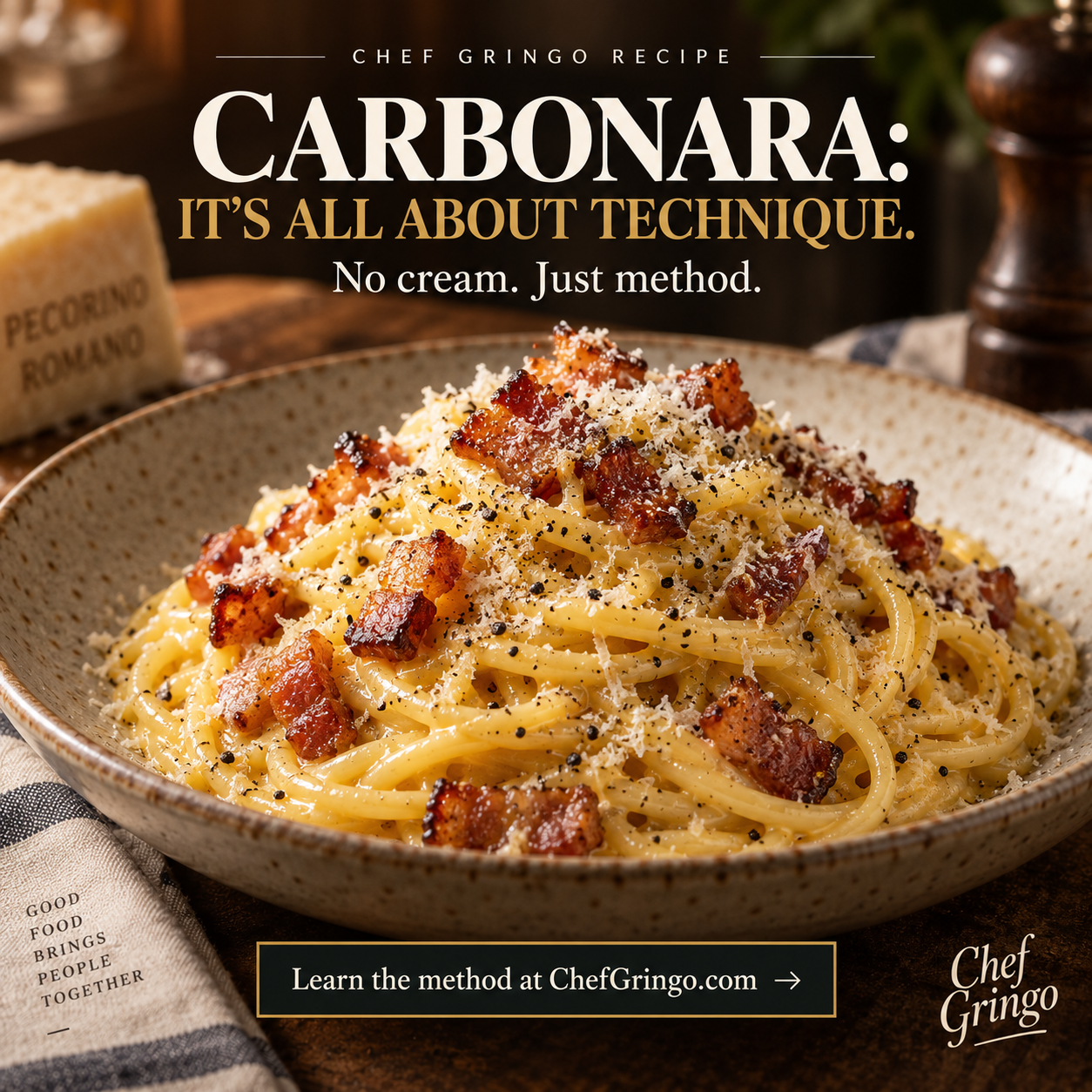
The visual cue: glossy sauce that clings to the pasta without looking scrambled, greasy, or watery.
Before you start
Carbonara moves fast once the pasta is ready.
Have the egg mixture made, the cheese grated, the guanciale rendered, and the pasta water reserved before you combine anything.
Mise en place first
Once the pasta leaves the water, there is no good stopping point.
Eggs go in off heat
Residual heat thickens the sauce. Direct burner heat scrambles it.
Pasta water is your control knob
Add it gradually until the sauce loosens and turns glossy.
Ingredients
Simple list. Precise execution.
An original four-serving reference recipe designed around a stable off-heat emulsion.
Start cooking
Five steps. Watch the heat.
The final two minutes matter more than anything else.
- 01
Set the mise en place
5 minWhisk whole eggs, yolks, cheese, and most of the pepper into a thick paste. Keep it beside the stove.
- 02
Render the guanciale
10 minStart the guanciale in a cool wide pan. Cook over medium-low heat until the fat is rendered and the edges are crisp.
Watch this: Avoid scorching; reserve the rendered fat.
- 03
Cook the pasta
10 minBoil pasta in moderately salted water until just shy of al dente. Reserve at least 250 ml pasta water.
- 04
Build the sauce off heat
3 minTransfer hot pasta to the guanciale pan, remove from direct heat, and toss. Add the egg mixture and toss vigorously, loosening with small additions of pasta water.
Watch this: No direct burner heat once the egg mixture is added.
- 05
Finish immediately
2 minAdjust with pasta water until glossy and flowing. Fold in crisp guanciale, plate, and finish with pepper and cheese.
Watch this: Serve promptly; the emulsion tightens as it cools.
What should it look like?
Read the sauce.
Clumpy and stiff
Add a splash of warm pasta water and toss.
Pooling in the bowl
Keep tossing. Add a little more finely grated cheese if needed.
Glossy and clingy
The sauce coats each strand and still moves when the pasta is tossed.
Why no cream?
The creaminess comes from the emulsion.
Egg, finely grated cheese, rendered pork fat, starchy pasta water, and controlled heat create the creamy texture. Cream is not required for the sauce to feel rich or smooth.
Chef Gringo rescue
Something went wrong? Fix the cause.
Eggs scrambled
Why: The pan was too hot.
Next time: Remove from heat earlier and let the sizzling calm before adding the egg mixture.
Sauce is dry
Why: Not enough pasta water or too much cooling.
Next time: Add warm starchy water a spoonful at a time while tossing.
Sauce is greasy
Why: The fat and water never formed a stable emulsion.
Next time: Toss more aggressively off heat and add a small splash of pasta water.
Cheese clumped
Why: The mixture hit too much heat or sat still.
Next time: Use finely grated cheese and keep the pasta moving as the sauce comes together.
Choose your guidance mode
Same recipe. Different level of detail.
Carbonara is an emulsion: egg, cheese, rendered pork fat, starch, and residual heat working together.
- Whisk the egg-cheese mixture while the guanciale renders.
- Cook pasta just shy of al dente.
- Reserve more pasta water than you think you need.
- Finish off heat and serve immediately.
Chef note: The sauce tightens quickly, so have plates — and people — ready.
You’re ready
Make it. Eat it immediately.
Carbonara is at its best the moment the sauce becomes glossy. Plate fast, finish with Pecorino and black pepper, and serve.